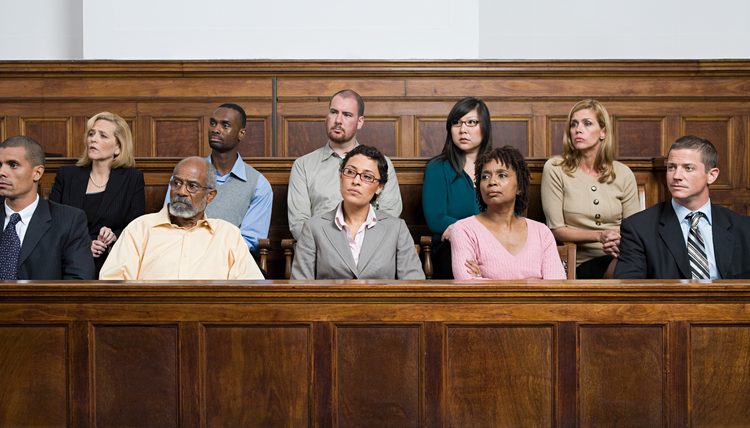
Imagine yourself being tried for a sensational crime, one that has gripped the passions of the entire country. It’s Casey Anthony, Duke Lacrosse and George Zimmerman, all rolled into one. Would you like to be tried in a well regulated courtroom, presided over by a judge, your fate in the hands of a jury that has spent weeks carefully reviewing all evidence and expert testimony? Or would you prefer for your fate to be decided by popular vote, your future in the hands of every Joe the Plumber with a pulse and an opinion, regardless of his knowledge of the case details?
Earlier, we had discussed why our current system of democracy is fundamentally flawed, and why our founding fathers had always intended for this nation to be a constitutional republic, and not a direct democracy. We had also discussed an alternative system of democracy, one that incorporates vastly successful insights from Google’s search engine.
Understandably, many were wary of making such dramatic changes to our electoral system, one that scraps the idea of one-person-one-vote. Hence why today, I’d like for us to discuss another great alternative and improvement over our current dysfunctional system. One that is much more simple and directly parallels a civic system that we already use everyday, with great success: the Jury system.
Our founding fathers were always very wary of mob rule, and justifiably so. History is full of populism and mob justice gone wrong, with terrible consequences. Even today, who amongst us is willing to put our life in the hands of a mob that is short on facts, but long on emotion?
The solution that was found: Trial by Jury. Power was decentralized and fairly portioned out to all segments of society, by creating a system that randomly picks Jurors from all demographics and walks of life. But at the same time, the problem of misinformation and emotional decision making was solved by requiring that the Jurors spend weeks sitting in a courtroom.
One that is well regulated by Judges and a system of procedures to combat the spread of incorrect and misleading information. One where both sides get to present their best case through facts, evidence and expert testimony. One where the Jury is required to pay full attention to the proceedings and deliberate carefully before finally making their decision.
Our current system of democracy solves the first problem admirably, by ensuring that political power is fairly distributed amongst all segments of society. But it fails horribly at resolving the second problem. Each campaign season finds itself marked by soundbites, shallow arguments, and opinions as opposed to facts, because these are the things that win elections.
Rumors and misinformation roam free and can change the course of elections, as John Kerry, John McCain and Barack Obama can all tell you. Without any pressure to listen to expert testimony from both sides, voters are free to self-segregate themselves within their own individual echo chambers. It’s no surprise that the election process more closely resembles a PR campaign, as opposed to a fact finding mission.
It’s all truly unfortunate, given that a much better system is staring us right in the face.
Imagine during every election year, auditoriums packed full of jurors, convening across every state in the country. Jurors holding the greatest civic responsibility of all: electing our Congressmen and the President.
Imagine every candidate being tried in these auditoriums across the country. Their actions, campaign promises, voting records, public policy platform and general conduct… all scrutinized carefully in a courtroom presided over by a judge. Imagine them being grilled by opposing attorneys for every campaign promise they broke, for every campaign contribution they accepted from lobbyists, for every dollar they spent on wasteful government expenditures, and for every vote they cast in favor of special interests. Imagine experts from the fields of Foreign Policy, Healthcare, Fiscal Planning, Economics and National Security… all brought in to give testimony on the candidates’ positions and how viable their plans are.
Imagine a jury in every county, a hundred strong, randomly picked from the public to represent every section and segment of our society, displaying the full and complete diversity that is America. Imagine a jury, excused from work for a few weeks, attentively listening to all expert testimony, carefully considering all the facts and analysis presented, and meticulously deliberating over who they would like to have represent them in their state capitol and Washington DC.
That is the type of democracy that I would like to live in.
Churchill once famously remarked that “the best argument against democracy is a five-minute conversation with the average voter.” The quote is often invoked as an insult against the average Joe, but I don’t see it that way.
Keeping up with politics, public policy and current affairs isn’t a hobby that most of us dedicate ourselves to… and we shouldn’t have to. We all have our own lives to lead, our own stories, problems and passions that we follow. If every single person was a West Wing aficionado intent on following every political development, our society would be so much more boring and so much less colorful.
Some of us may enjoy reading the news religiously, and others may enjoy volunteering in our local communities. Some of us may enjoy careful deliberation of public policy initiatives in Washington, and others may prefer dedicating their lives towards achieving scientific and technological breakthroughs.
These are all great passions worth pursuing, and we need a political system that doesn’t rely on every voting citizen becoming a public policy expert. A system that ensures that every candidate gets a fair and comprehensive hearing, by an electorate that has been given all the evidence and testimony needed to carefully deliberate and reach a conclusion.
The jury system may not be perfect – juries do return bad verdicts more frequently than we’d like. And the specific details of its implementation will certainly need to be tweaked to better fit elections. But it is certainly a vast improvement over any popular-vote based alternative. It’s time we applied these lessons to our democratic process as well. It’s time we started conducting our Democracy by Jury.
Related Links:
H.G. Wells championing this same idea, 100 years ago
The problems inherent to direct democracy
Direct Democracy vs Representative Democracy
Reforming democracy – the Google way
Discussion thread on /r/philosophy
California using juries to investigate government operations
Election by Jury – a movement started by me and a few others
 Outlook Zen
This idea of democracy by jury is obviously a very noble one. The scrutiny entailed would allow only the best we can provide to run our country. However, we need to ask whether this is practical. How much time would need to be alloted for this process to take place? What and how many resources would be required? Would it be too much of a resource sink, negating any benefits it could provide?
How about simply organizing the legislature into specialist 9-member committees and directly electing them (each voter can have a vote volume of 1, divisible into arbitrarily many parts, and voters will self-sort themselves by whatever their own concerns and expertise are, and if the candidates are picked by serial elimination it is possible to partially correct for both wasted and redundant votes by redistributing each voter’s wasted/redundant vote fraction by spreading each that fraction accross all the voter’s uneliminated candidates in the proportion in which the voter voted for those candidates) in a single national multiple-winner constituency, and treating the executive similarly.
[Also, note that committees with more than 20 members tend to crystallize into dedicated opposing groups,and committees with more than 12 people need a mediator or means of organization other than (but pussibly in addition to) in-person handraising, and committees of more than 7 people need a chairperson. My claim about the 20-member committees is supported by some academic literature —http://scienceblogs.com/effectmeasure/2009/01/15/the-right-or-wrong-size-for-a/ —; note the general non-existence of low-corruption countries with more than 20 people in cabinet). I’ve seen some policy papers recommend 9-member committee limits for drafting work, which is why I suggested that, but it may also be possible to have, say, a paid 7-member creative committee in each subject area, and then for each such committee, a 20-member committee specializing in the same subject (and having no common members) will have no creative power but instead will be required to approve the bill. In this case you retain creative efficiency while retaining robustness of ideas, and keeping the number of people who have to approve of the material relatively large, reducing moral hazard and pride of authorship problems.
I’m not sure I follow the first portion of your comment. Are you suggesting that we treat representatives in the same way we elect a President (i.e. allow the general population to vote for the legislative branch without regards to geography)? If so, this would completely unravel the tenants of republicanism as representatives would feel no obligation to uphold the interests of those that elected them. Given this, I feel as though I must have misunderstood your proposal. Additionally, independent of the electoral process, we do have committee assignments in both the House and Senate aimed at targeting representatives with special skills, abilities or experience and using them in a way so as to provide the most benefit for the collect body and nation as a whole.