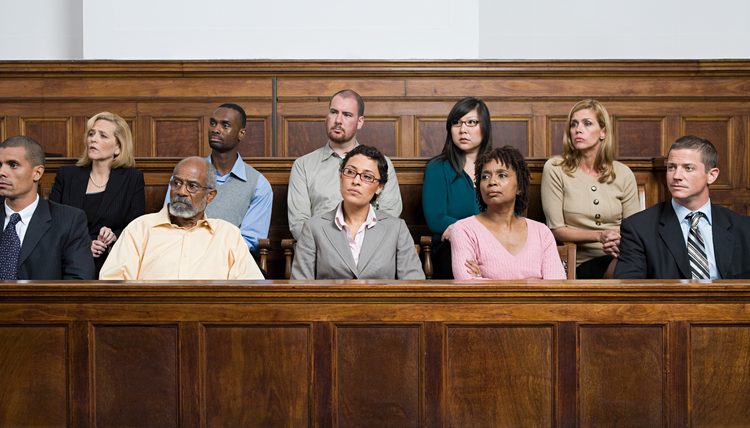
Imagine yourself being tried for a sensational crime, one that has gripped the passions of the entire country. It’s Casey Anthony, Duke Lacrosse and George Zimmerman, all rolled into one. Would you like to be tried in a well regulated courtroom, presided over by a judge, your fate in the hands of a jury that has spent weeks carefully reviewing all evidence and expert testimony? Or would you prefer for your fate to be decided by popular vote, your future in the hands of every Joe the Plumber with a pulse and an opinion, regardless of his knowledge of the case details?
Earlier, we had discussed why our current system of democracy is fundamentally flawed, and why our founding fathers had always intended for this nation to be a constitutional republic, and not a direct democracy. We had also discussed an alternative system of democracy, one that incorporates vastly successful insights from Google’s search engine.
Understandably, many were wary of making such dramatic changes to our electoral system, one that scraps the idea of one-person-one-vote. Hence why today, I’d like for us to discuss another great alternative and improvement over our current dysfunctional system. One that is much more simple and directly parallels a civic system that we already use everyday, with great success: the Jury system.
Our founding fathers were always very wary of mob rule, and justifiably so. History is full of populism and mob justice gone wrong, with terrible consequences. Even today, who amongst us is willing to put our life in the hands of a mob that is short on facts, but long on emotion?
The solution that was found: Trial by Jury. Power was decentralized and fairly portioned out to all segments of society, by creating a system that randomly picks Jurors from all demographics and walks of life. But at the same time, the problem of misinformation and emotional decision making was solved by requiring that the Jurors spend weeks sitting in a courtroom.
One that is well regulated by Judges and a system of procedures to combat the spread of incorrect and misleading information. One where both sides get to present their best case through facts, evidence and expert testimony. One where the Jury is required to pay full attention to the proceedings and deliberate carefully before finally making their decision.
Our current system of democracy solves the first problem admirably, by ensuring that political power is fairly distributed amongst all segments of society. But it fails horribly at resolving the second problem. Each campaign season finds itself marked by soundbites, shallow arguments, and opinions as opposed to facts, because these are the things that win elections.
Rumors and misinformation roam free and can change the course of elections, as John Kerry, John McCain and Barack Obama can all tell you. Without any pressure to listen to expert testimony from both sides, voters are free to self-segregate themselves within their own individual echo chambers. It’s no surprise that the election process more closely resembles a PR campaign, as opposed to a fact finding mission.
It’s all truly unfortunate, given that a much better system is staring us right in the face.
Imagine during every election year, auditoriums packed full of jurors, convening across every state in the country. Jurors holding the greatest civic responsibility of all: electing our Congressmen and the President.
Imagine every candidate being tried in these auditoriums across the country. Their actions, campaign promises, voting records, public policy platform and general conduct… all scrutinized carefully in a courtroom presided over by a judge. Imagine them being grilled by opposing attorneys for every campaign promise they broke, for every campaign contribution they accepted from lobbyists, for every dollar they spent on wasteful government expenditures, and for every vote they cast in favor of special interests. Imagine experts from the fields of Foreign Policy, Healthcare, Fiscal Planning, Economics and National Security… all brought in to give testimony on the candidates’ positions and how viable their plans are.
Imagine a jury in every county, a hundred strong, randomly picked from the public to represent every section and segment of our society, displaying the full and complete diversity that is America. Imagine a jury, excused from work for a few weeks, attentively listening to all expert testimony, carefully considering all the facts and analysis presented, and meticulously deliberating over who they would like to have represent them in their state capitol and Washington DC.
That is the type of democracy that I would like to live in.
Churchill once famously remarked that “the best argument against democracy is a five-minute conversation with the average voter.” The quote is often invoked as an insult against the average Joe, but I don’t see it that way.
Keeping up with politics, public policy and current affairs isn’t a hobby that most of us dedicate ourselves to… and we shouldn’t have to. We all have our own lives to lead, our own stories, problems and passions that we follow. If every single person was a West Wing aficionado intent on following every political development, our society would be so much more boring and so much less colorful.
Some of us may enjoy reading the news religiously, and others may enjoy volunteering in our local communities. Some of us may enjoy careful deliberation of public policy initiatives in Washington, and others may prefer dedicating their lives towards achieving scientific and technological breakthroughs.
These are all great passions worth pursuing, and we need a political system that doesn’t rely on every voting citizen becoming a public policy expert. A system that ensures that every candidate gets a fair and comprehensive hearing, by an electorate that has been given all the evidence and testimony needed to carefully deliberate and reach a conclusion.
The jury system may not be perfect – juries do return bad verdicts more frequently than we’d like. And the specific details of its implementation will certainly need to be tweaked to better fit elections. But it is certainly a vast improvement over any popular-vote based alternative. It’s time we applied these lessons to our democratic process as well. It’s time we started conducting our Democracy by Jury.
Related Links:
H.G. Wells championing this same idea, 100 years ago
The problems inherent to direct democracy
Direct Democracy vs Representative Democracy
Reforming democracy – the Google way
Discussion thread on /r/philosophy
California using juries to investigate government operations
Election by Jury – a movement started by me and a few others
 Outlook Zen
While I like the idea, I feel there are a few things messing.
1) Criteria. In a trial by jury there are specific criteria the jury follows in making their decision (laws, rules of evidence, etc.). What criteria would this jury use? Should candidates always fight for their district? for their party? for the nation? selflessly? for social justice? for economic improvement? Many if not all of these obligations can be at odds, even for single decisions, and all of these criteria relevant, with no clear hierarchy. Should a juror in this case vote for a candidate that values their district above the overall health of the nation or not? Which is better a candidate that fights for economic prosperity or human dignity? Is an independent candidate better than a party rubber-stamper?
2) Jury Duty is nearly universally hated. “The only people that serve on jury duty are people too stupid to get out of jury duty.” Almost no one would volunteer for such a project; except of course people who have already made up their minds before the process begins (corporations who are backing a candidate, family members of candidates, etc.).
3) Total agreement. Juries work because either everyone agrees or they don’t. As you increase the number of jurors, the probability of total agreement tanks. Put 100 people in a room and there will be no agreement on anything. If, in the end, this just comes to a vote instead of a unanimous decision, then it is no better than the current system.
Interesting comment. My thoughts:
1) You raise an interesting question, but this is no different from the dilemma that voters already face. Should people vote according to their interest, their state’s interest, or their nation’s interest? A jury system does not resolve this dilemma but it doesn’t worsen it either.
2) Like you mentioned, stringent safeguards will indeed be needed to ensure that people can’t escape jury duty easily.
3) Since voting does involve some degree of subjectivity, it’s unreasonable to expect unanimous decisions. Especially so with large pools of jurors. That said, the process of being a juror, sitting in a courtroom, hearing all facts arguments and expert testimony, will serve to make jurors much better informed than the average lay person. This is where the primary benefit of the system comes in.
I have been thinking about a similar system for some time now, it was originally based on the jury system, but I’ve since made some changes that I think improve it’s fairness. I’ll try to explain as clearly as I can and I’d love to hear your feedback.
start with a president. One individual, after meeting certain criteria wins the position in a standard presidential election. He/she must not claim party affiliation or receive partisan funding.
He/she holds this position for a long term 20-30 years, in all matters he can cast one presidential vote. and has vito power. His purpose is to look at the long term outcome of decisions.
next with a basic parliament, the number of members will correlate to the population so that each member represents X percent of the population. as example, if a city contains 4 million people it may have 4 representatives, each would be tasked with representing fairly the demographics in that city. The same for rural areas, an area would be mapped that encloses 1 million residents, and representative is charged with finding the mean opinion of those people. Each representative is in office for a middle length term about ~ 5 years, they represent the people in the middle term.
When an issue is up for debate the representatives discuss the issue and vote, the winning vote carries through as one vote.
Then we have the Jury system, a random representative selection of people are assembled and given all the information for the issue from experts for as long as necessary, as brief as possible. they are anonymous, to everyone including each other. Their task is to see how any change will affect the average citizen in the short term. They vote and return to normal life, bound to not speak about their individual votes.
These three votes, representing the people in short term, middle and long term effects, from people, directly, indirectly and abstractly in the populous, then are shown and express the will of the people.
There are a few more details and quirks to avoid corruption and logistic difficulties, but I don’t have time for everything right now. tell me what you think, and I’d love to hear your suggestions.