look, whatever the {official economic} charts say is a 100% bold faced lie. have you seen the price of a little ceasars pizza? it’s jumped nearly 50% in the last 4 years. my salary has not gone up 50% relative to my experiece in the last 4 years. most recently i got a salary cut. you can’t make me believe the economy is doing fine. people are saying the economy is fine and people don’t like being lied to.
The above popular comment on social media is a great example of something I hear constantly. People have stopped trusting the experts even on mundane objective factual matters like the GDP or the inflation rate. Much less prescriptive recommendations such as vaccinations.
Political disagreements and differences of opinion are inevitable and unavoidable. But it is impossible for us to thrive as a society when we cannot even agree on objective factual statements about the world around us. It is impossible for us to productively resolve contentious discussions on topics like immigration, when we cannot even agree on the basic facts, like the impact immigrants have on the economy and crime rates.
It is easy to blame all of the above on idiots wearing tinfoil hats who are “doing their own research” via social media. I’ll admit it – my patience with them has certainly run thin after the past few years. The evidence against things like flat-earth-theory is overwhelming, and you really have to wonder about the mental competence of people who still stubbornly hold on to such ideas.
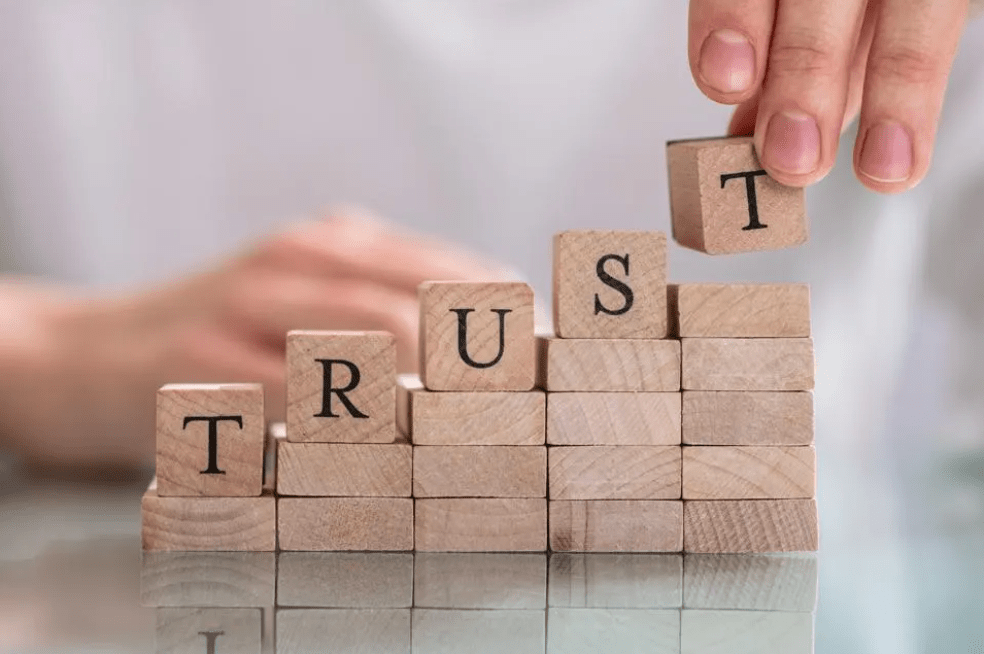
That said, there is a grain of truth behind people’s lack of trust in our institutions. Trust is a hard-earned commodity, wholly dependent on unbiased truth and impartial judgment. Trust also takes years to build, but is lost in a matter of days. And in the past decade, we’ve had too many incidents that have shaken people’s trust in our institutions:
- Leading scientific journal (Nature) in 2022 declared that all prospective papers must “do no harm”, stating further that “harms can also arise indirectly, as a result of the publication of a research project – for instance, stigmatization of a vulnerable human group or potential use of the results of research for unintended purposes.” And also that “although the pursuit of knowledge is a fundamental public good, considerations of harm can occasionally supersede the goal of seeking or sharing new knowledge, and a decision not to undertake or not to publish a project may be warranted.” The perceived implication being that controversial studies, such as the impact of immigration on crime, can only ever be published if they reach a progressive conclusion
- Universities hiring and promoting professors based partly on DEI factors, and discriminating on the basis of political ideology
- Corporations and academics touting the benefits of diversity on team performance, but sweeping under the rug all studies reaching different conclusions (1, 2, 3, 4, 5)
- Researcher not publishing the results of a scientific study, because it supports arguments made by conservatives
- Fauci telling people not to wear masks in the early days of covid
- Steele dossier allegations and similar Trump-Russia-collusion investigations
Let me make one thing clear. Despite all of the above, I still trust experts and institutions with my life. They may have some blinders, but they are generally reliable, most of the time. They may have some biases, but these are still well-intentioned, transparent, and in good faith. The alternative is to put my trust in the hands of a social media mob, or to live life in complete ignorance. Our institutions may not be perfect, but they are miles ahead of the alternative.
That said, it is still understandable how the above incidents have resulted in half the country having lost trust in academia, scientific research, mainstream media, and other institutions.
If you’re an immigration skeptic and a professor tells you that immigration does not cause higher crime rates, your immediate response is going to be “well, of course no one is going to publish research showing a link between immigration and crime”.
If you’re an anti-masker and someone tells you that it is imperative for you to wear a mask, your immediate response is going to be “why should I believe anything you say when Fauci told me a few months ago that I shouldn’t wear a mask”.
If you’re a Trump supporter and someone tells you that he is a danger to democracy, your immediate response is going to be “I’ve heard this before about the Steele dossier and Russia collusion. Why is this any different?”
I myself am a supporter of both immigration and masking up during a pandemic. I also believe that Trump is indeed a danger to democracy. You can feel passionately about all these things, and still understand the reasons why others may be skeptical. And how our past actions have partially fueled their skepticism.
Trust is hard earned, but easily lost. When we tell white lies or one-sided truths, we may do so with the best of intentions. But in the long run, this road leads only to distrust in the institutions that our society relies on.
There is only one solution to restoring and maintaining the trust we need to function as a society. Radical honesty.
- We need our researchers to be relentlessly focused on the pursuit of truth. No matter how unpleasant and odious that truth may be
- We need our authorities to show us the full truth. Not just the truths that are aligned with their own agenda
- We need our media outlets to refrain from speculative accusations and crying wolf. No matter how juicy the target may be
Only through radical honesty can our institutions win back the people’s trust. And only once they have earned people’s trust, can we fix the ills plaguing our society.
 Outlook Zen