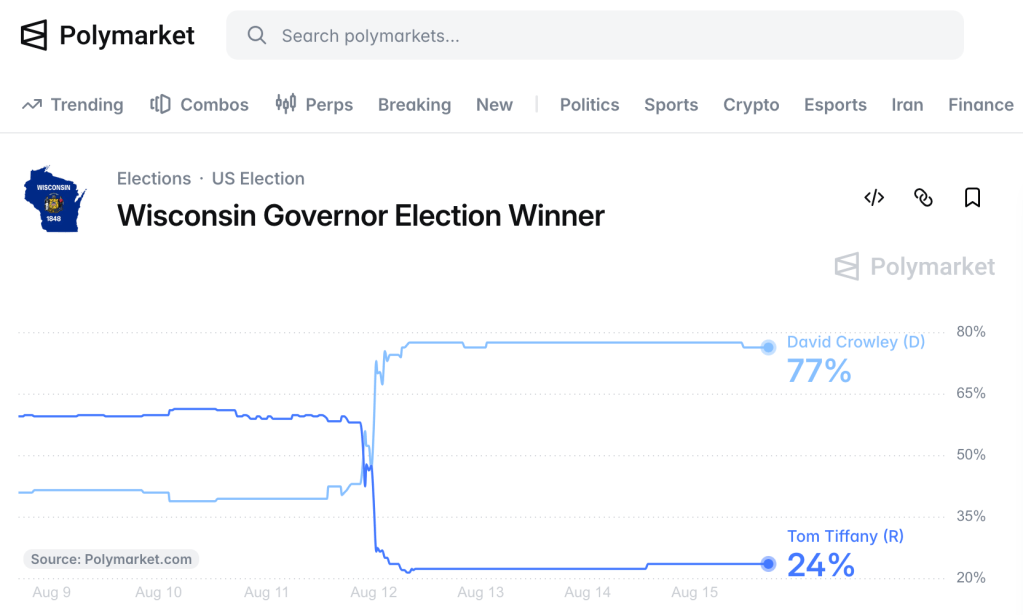
In the past week, we saw something very remarkable. In a matter of hours, Democrats saw their chances of winning the Wisconsin Governor election jump from 40% to 77%.
What changed? Did new polling numbers come out? Was there a shocking scandal? Did someone fail miserably at the debate?
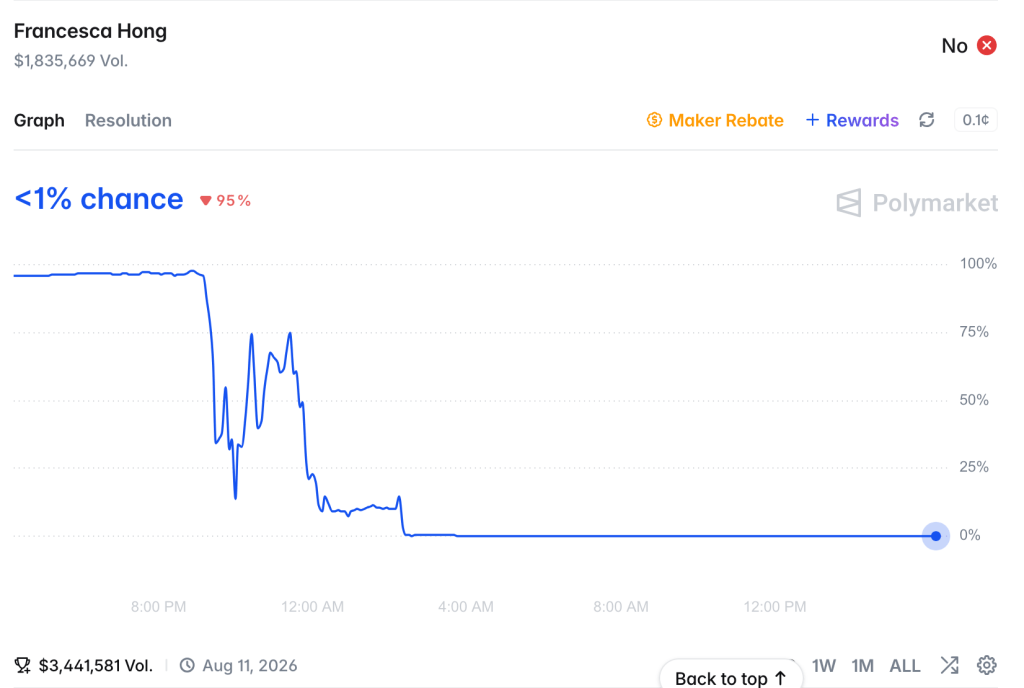
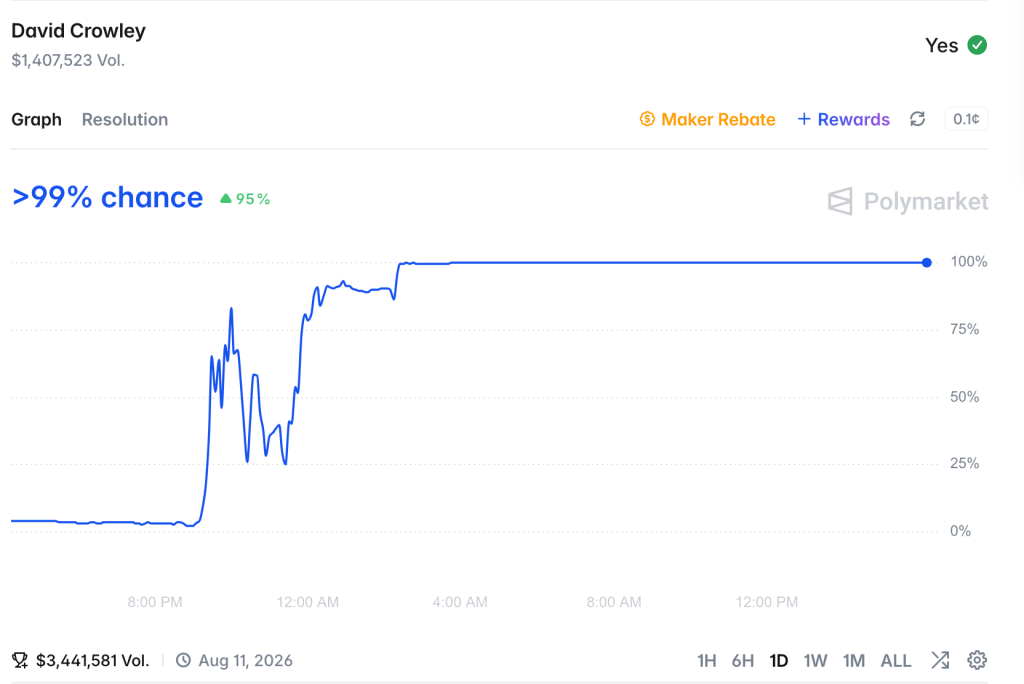
No, it was none of the above. What actually happened was that the Democratic primary results came in. Francesca Hong was the favorite to win the Democratic nomination, and pundits predicted that she had a 40% chance of winning the general election. But as soon as David Crowley was announced as the nominee, the Democrats saw their odds of winning the general election double. They went from being slight underdogs, to clear frontrunners.
If you’re a Democrat, you may want to hold off on your celebrations though – we’ve seen the exact opposite happen in other elections. For instance, over the past month, Democrats have seen their odds of winning the Michigan Senate election drop from 72% to 55%. They have gone from being favorites, to what is essentially a coin-flip.
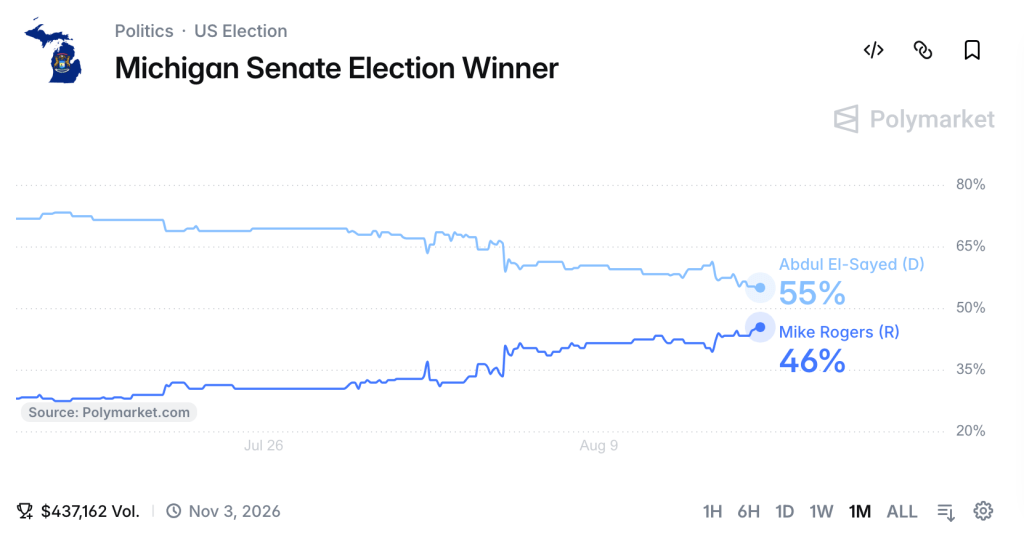
And once again, this drop in odds has been almost entirely driven by the primary election. El-Sayed started off the month with a 66% chance of winning the primary. And as the month went on, as it became increasingly clear that El-Sayed was going to win the primary, the Democrats saw their general election odds correspondingly fall.
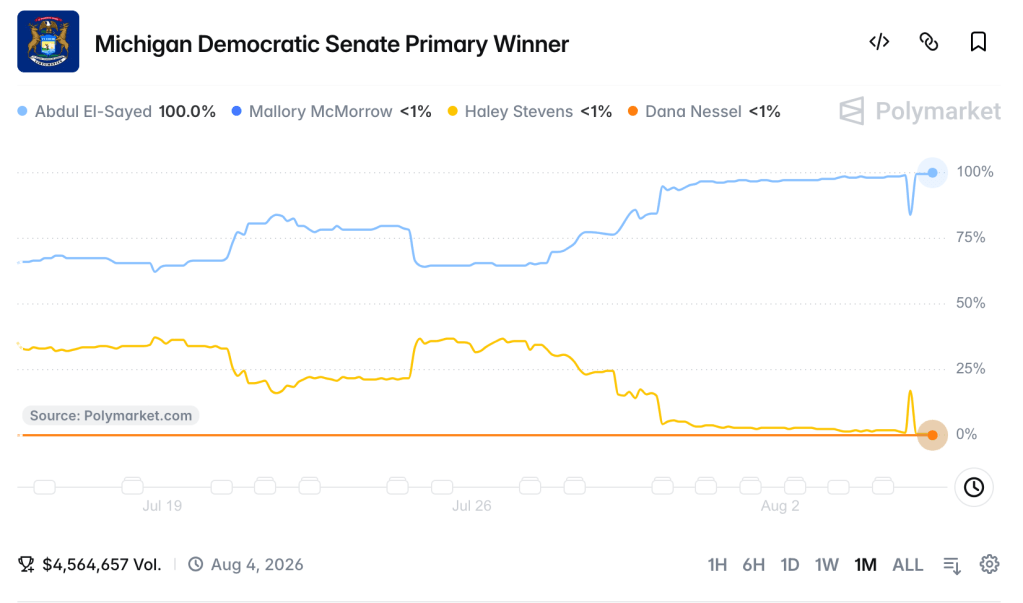
Now, I’ll be honest and tell you that I don’t know the first thing about Hong, Crowley, El-Sayed, or Stevens. I have no idea how charismatic they are, or what policies they are endorsing. Heck, I can’t even pick out Wisconsin on a map. And yet, I don’t need to know any of these things in order to tell you that Stevens is more likely than El-Sayed, and Crowley is more likely than Hong, to win the general election if nominated. The numbers speak for themselves.
For too long, people have evaluated “electability” using extremely unreliable signals.
- Personal appeal: “If I really like this candidate, general election voters will also really like them!”
- General election polls: “The latest Siena poll shows that this candidate will comfortably win the general election!”
- Ideology: “This candidate is an enlightened centrist. Therefore, she is most likely to win the general election, unlike all these other un-electably partisan candidates!”
Unfortunately, all of these signals are far worse than the alternative.
Personal appeal is probably the worst – just because you’re a die-hard Bernie bro or MAGA devotee does not mean the rest of the country feels the same way. We should all have the humility to not project our own feelings onto others.
Polls are generally a good signal, but only once we get much closer to the election date, and once both nominees have been chosen and subjected to the full barrage of attack ads and media scrutiny. Until then, “fresh faces” consistently overperform in polls due to the simple fact that they haven’t been bruised up yet.
Ideology is probably the most reliable of the three during the primaries, but that isn’t saying much. It is all too easy for “centrists” and “moderates” to suddenly find themselves branded as “establishment” candidates in an electorate that is tired of the status-quo. Or for someone with all the “right platform stances” to lose anyway because voters don’t think they are “authentic” or “likeable”.
If this was 20 years ago, I would have thrown my hands in the air and said that’s the best we can do. Luckily for us in 2026, there is a far better way. Prediction markets, like Polymarket. Exactly the ones we had discussed at the start of this essay. To quote research on this topic:
The evidence we present in this paper shows that the markets are also accurate months in advance, and do a markedly better job than polls at these longer horizons. In making our comparisons, we compare unadjusted market prices to unadjusted polls, demonstrating that market prices aggregate data better than simple surveys where the results are interpreted using sampling theory
Prediction markets aggregate dispersed and unpublished information (i.e., a brewing scandal may be known to a few investors before the general public) … Further, prediction market stocks are based on the value of the candidates on Election Day; thus, investors are incorporating their information on how it will affect the race on Election Day, while poll-based forecasts are only able to debias the information based off of previous cycles (i.e., investors can discount a bump in the polls generated by the visit of a popular leader, but poll-based forecasts can only discount the bump if it happened regularly, at the same time, in previous cycles)
Descriptive and predictive results indicate national Polymarket data was superior to that of the polling data in predicting Trump to be the winner of the 2024 presidential election. Within the swing states specifically, examination of the Polymarket data provided unique insight into voting behavior beyond that which was available from the polls.
Please note that this is not intended to be a general rant against polls. Once the primary season is done, and we head into the final few months before the general election, both polls and prediction markets can be of comparable accuracy. The main problem with polls arise precisely when we need them the most – when we are picking our nominees during the primaries. That is when general election polls are completely unreliable.
So how exactly do you go about using prediction markets to evaluate a candidate’s electability? Simple – look at their odds of winning the general election, and divide it by their odds of winning the primary contest. This will give you the likelihood of that candidate winning the general election IF nominated by their party.
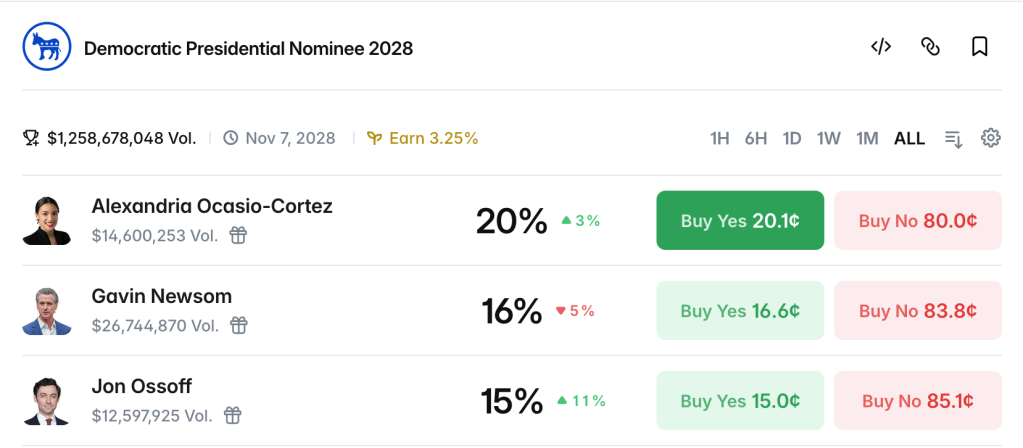
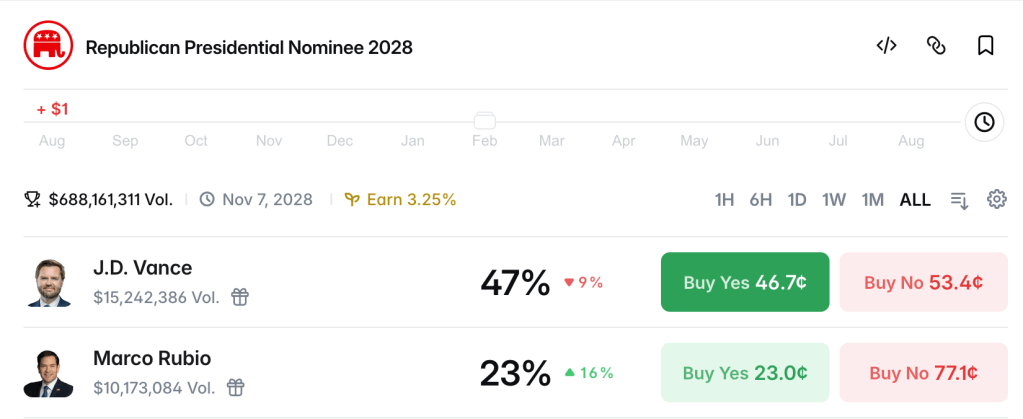
Let us put this into practice by looking at the prediction markets for the 2028 Presidential primaries and election. The two images below show each candidate’s odds of winning their respective party’s primary:
And this image shows each of the above candidate’s odds of winning the general election:
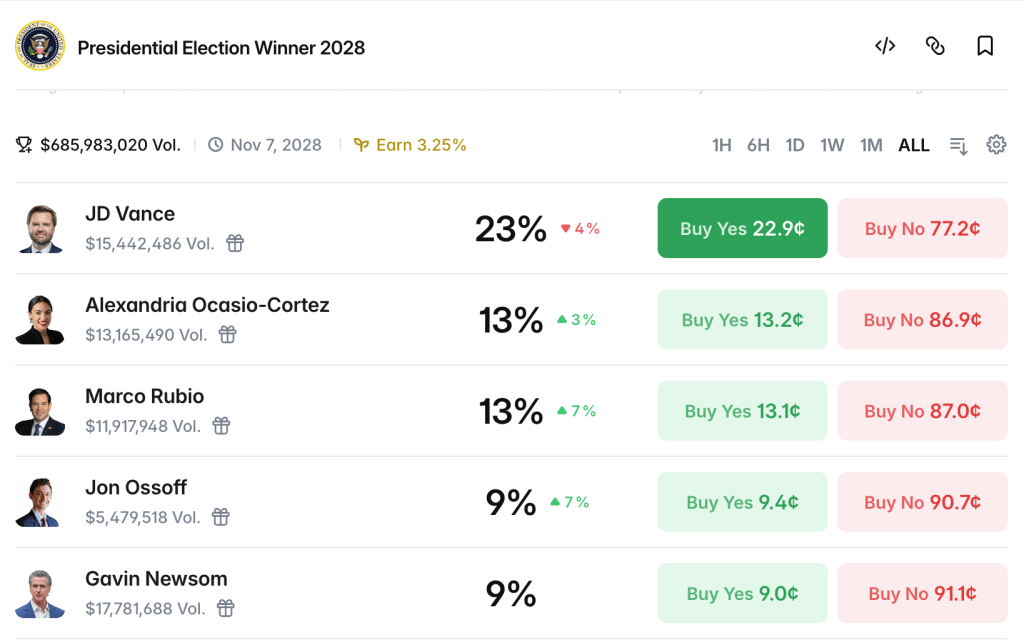
If we looked solely at each candidate’s odds of winning the Presidency, Vance may seem like the “most electable” candidate. But this is false. As a primary voter, what you should care about is not the candidate’s odds of winning the general election. What you should care about is the candidate’s odds of winning the general election IF nominated. When we apply the above conditional probability formula, here’s what we end up with:
- Republicans
- Vance: 22.9/46.7 ~= 49% chance of being elected if nominated
- Rubio: 13.1/23.0 ~= 57% chance of being elected if nominated
- Democrats
- AOC: 13.2/20.1 ~= 66% chance of being elected if nominated
- Ossoff: 9.4/15.0 ~= 63% chance of being elected if nominated
- Newsom: 9.0/16.6 ~= 54% chance of being elected if nominated
Are these projections perfectly accurate? Of course not. We’re nowhere close to the primaries, let alone the general election. The fact that so many people are being “favored to win if nominated” suggests that people are being a little too optimistic about their idols’ odds.
But as we get closer and closer to the 2028 primaries, and as the more serious investors start doing their due diligence, the quality of these predictions will keep getting better and better. By the time we get to December 2027, I would place great trust in these prediction markets’ implied odds, more so than any poll or media commentator. They may not be perfect, and they will make mistakes from time to time, but they are far superior to all other alternatives available at that time.
All of which brings me to my final, and most important point. Should we even be picking our nominees based on these cold impersonal formulas? Shouldn’t we instead pick a nominee whom we admire, someone whose platform resonates the most with us, regardless of their electability?
That depends. In an ideal world where “the other party” has nominated someone reasonable, you absolutely should “go for it”. Support the person you like the most, while secure in the knowledge that even if they lose, they will only be losing to someone who is a decent alternative.
Unfortunately, that is not the world we live in. We live in a world where the Oval Office is occupied by a convicted felon, sex offender, and the greatest threat to the American republic in the history of our nation (Dick Cheney’s words, not mine).
Here’s a question that I would pose to every single person who has strong political views: when you’re facing an opponent that is such an existential threat to all that you hold dear, do you think that is the right time to roll the dice on someone who shares every one of your unpopular opinions? Or do you think you ought to play it safe and support someone whom you may not agree on everything with, but is more likely to win the general election and hold off the barbarians at the gate?
It doesn’t take a genius to win an election. It’s so easy, even an idiot can do it. All it takes is a quick glance at the prediction markets. And the discipline to choose the safe boring play over the glorious Hail Mary.

